
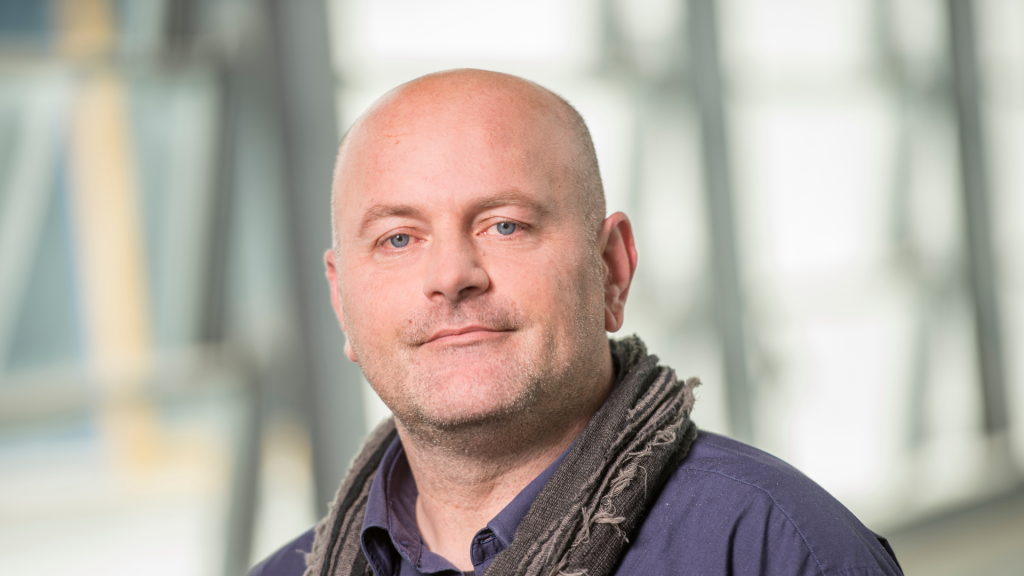
The European BOW project is approaching its end. We wanted to interview the Principal Investigators of each partner to learn more about their work and their expectations. We start with Sebastiano Di Bucchianico, from Helmholtz Zentrum München (HMGU).
Hi Seba! Please tell us about yourself:
“Moin”, they say in the Nord Germany where I moved on 2022 after living for five years in Munich working at HMGU (Helmholtz Munich, German Research Center for Environmental Health). I’m still working at HMGU but I moved in Mecklenburg-Vorpommern to set-up a new S2 biolaboratory of Aerosol Mutagenesis at University of Rostock within the group of Prof. Ralf Zimmermann, and I brought with me the cutting-hedge research of BOW project. It was amazing to see all BOWers moving to the Baltic Sea for a BOW consortium meeting at University of Rostock. I’m Italian and I’m used to the Mediterranean Sea perfumes, flavours, and colours but I had an unforgettable experience at Karolinska Institutet in Stockholm, letting me discover the beauty of the Baltic Sea among the state-of-the-art of molecular and biochemical nanotoxicology. Here I’m back, just the other seaside. A difficult and fascinating sea like that of my native region, Abruzzo, where I got a PhD in Cell and Molecular Biology.
What caught your attention the most about the BOW project when it was presented to you?
Nanomedicine and nanotoxicology are cross-related disciplines of the nanotechnology field, which synergistically can support the exploitation of new clinical applications. I was fascinated by the idea of BOW project to recapitulate biomimetic functions to synthetic nanodevice by using the cellular language of intercellular communication. I was introduced by a great friend, Francesco Valle, to Paolo Bergese and Antonella Bongiovanni, BOW leaders, and I was definitively attracted by their enthusiasm and scientific curiosity, so it was a natural decision to join the BOW project.
What are HMGU’s responsibilities in the BOW project?
HMGU is involved in BOW project to assess the biocompatibility of BOW products and test their performances in targeting specific cell types or exploit their magnetic and optical properties. The clinical application of nanodevice is hindered by safety and toxicity concerns. Together with all other work packages we are implementing safe-by-design approaches to minimize such risks.
What is the main innovation you are contributing to?
I’m dedicating large part of my work in establishing physiologically relevant human airway cell models for inhalation nanotoxicology studies. Again, nanotoxicology and nanomedicine may work in a close partnership and I’m applying Air-Liquid Interface methods to test the potential of BOW products as inhalable nanomedicine formulations.
Regarding your initial expectations, how has the project developed?
I’m basically an optimistic person so I was starting the BOW adventure with high expectations, but I would never have imagined that the results we are obtaining could be so surprising and coherent between different organisms, groups, approaches. Hope the BOW project will develop in a BOW 2.0 project!
What learnings from the BOW collaboration do you take with you?
A multidisciplinary consortium made by physicists, chemists, and biologists sharing the same passion in doing research complementing the skills of everyone. Science as universal language is what I’ll put in my luggage.
What would you like to highlight from the HMGU team in the project?
To guide PhD students and postdocs to shape their way in doing research is an amazing experience and I’m glad to see how fast they are growing up, so I’m really thankful to Jana, Johannes, Mohammad, Svenja and Wesam for their enthusiasm, hard work and scientific curiosity.

