
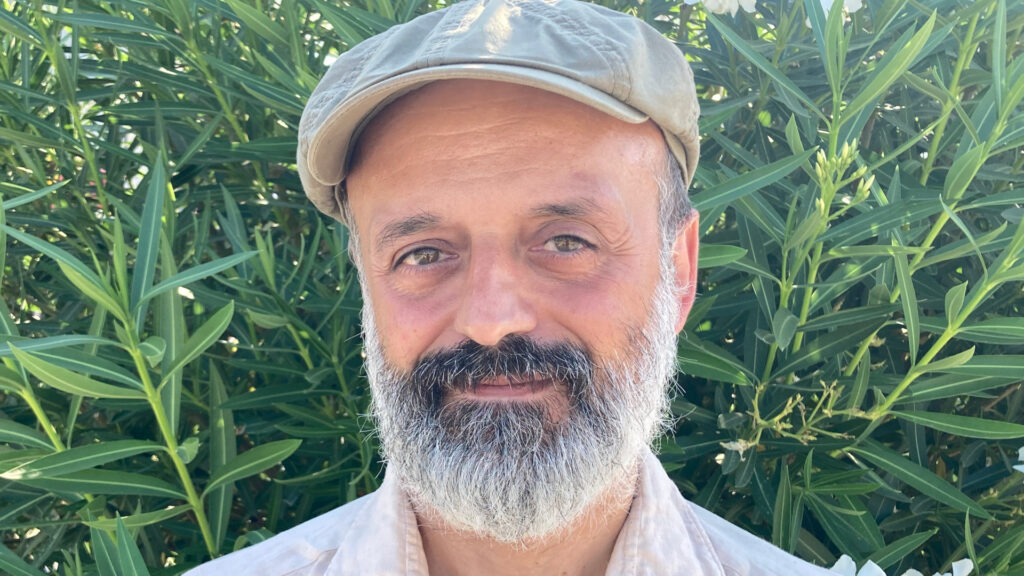
As the European BOW project approaches its conclusion, we are spending some time with the Principal Investigators from each partner organization to learn more about their work and expectations. Today, we turn our focus to Francesco Valle, representing the Istituto per lo Studio dei Materiali Nanostrutturati (ISMN), part of Italy’s largest research entity, the Consiglio Nazionale delle Ricerche (CNR).
Hi, Francesco! Please tell us about yourself:
Buongiorno! I am currently Senior Researcher at the Istituto per lo studio dei materiali nanostrutturati (ISMN). I am a Physicist graduated at the University of Rome “La Sapienza” with a PhD at the University of Lausanne. I have then been working at the Ecole Polytechnique Federale de Lausanne (EPFL) and at the University of Bologna “Alma Mater Studiorum” before joining the CNR in 2008.
My research activity has always been focused on the structural and nanomechanical properties of biological molecules and supramolecular complexes; I have always explored how cells tune the physico-chemical properties of their building blocks according to the environment where the latters have to perform their tasks.
What caught your attention the most about the BOW project when it was presented to you?
What I found really disruptive in BOW is the idea of transferring the molecular design optimized by cells onto nanotechnological devices. It is a novel way to challenge one of the most crucial targets of regenerative medicine: imparting biological properties such as immunological escape to technological materials.
I had no doubt in joining BOW because beside the beautiful scientific question there was a group of outstanding scientists participating, some of them being also very good friends as you may read in the other interviews on this website. I am convinced that to achieve good results it is necessary to have a good working environment both within the single laboratory and among the different research groups.
What are the ISMN’s responsibilities in the BOW project?
Our responsibilities in BOW can be summarized in characterizing nanomechanically the nanoscale secretome to distinguish the extracellular vesicles from the other biogenic nanoparticles and that will be used as starting material. This activity is performed mainly by atomic force microscopy (AFC) imaging and morphometric analysis. Along the four years we have also been involved in the characterization of the different synthetic nanomaterials and in the assessment of the successful fabrication of the hybrid materials. A parallel activity has taken advantage of the long-standing experience of ISMN in the magnetic characterization and has led to the development of a novel characterization technique able to determine the size of the particles in solution based on their magnetic properties and their diffusion in solution. For the reasons listed above we have closely interacted with all the partners producing materials.
What is the main innovation you are contributing to?
We have provided the possibility of identifying, by atomic force microscopy, at the single nano-object level the main materials used within BOW. The characterization is label free and requires a negligible number of samples thus it has become one of the fingerprints used to describe them.
The nanomechanical description has in addition been included in the Misev 2023 (Minimal information for studies of extracellular vesicles) guidelines released by the International Society of Extracellular Vesicles concerning the best practices to characterize vesicles. This demonstrates how the knowledge developed within BOW has influenced a large community.
What has been the biggest challenge for you and your team in the BOW project?
The application of a technology that we developed in a previous EU project for the extracellular vehicles (EVs) to object composed by both EVs portions and inorganic synthetic nanoparticles.
What results have been most satisfactory for you?
I cannot identify a single result but, as stated in the previous question, I would say that the application of the EVs characterization technique to the soft magnetic nanoparticles produced by the group of University of Santiago de Compostela is something that I did not expect to work so well as it did.
What learnings from the BOW collaboration do you take with you?
Personally, I am really fascinated by the work that the groups involved in the nanotoxicology analysis has devoted to the project; I gained a real insight in the amount of information that has to be provided to assess the impact of a nano-object on the living matter. New materials are opportunities but also risks and thus the community has to face this kind of work to prevent any future issues.
What would you like to highlight from the ISMN team in the project?
Our team includes both specialists in atomic force microscopy and magnetic measurements. They have all shown a great commitment to the project and they have been able to address all the requests coming from the partners of the consortium, in particular to follow the different workloads depending on the different samples sent to our laboratory for the characterization. I would like to mention in particular Marco Brucale who has always been crucial for the nanomechanical analysis and Alessandro Surpi who has been involved in developing magnetic characterization.
What expectations related to BOW and/or the EVs do you have once the project ends?
I really expect that all the knowledge developed, both at the basic science and at the technological level, will be one of the pillars for improving the biocompatibility of complex devices. No matter if it will be a bioelectronic device or a prosthesis, the idea of building a wetsuit able to impart the properties designed by the nature through evolution will play a key role in the near future.

