
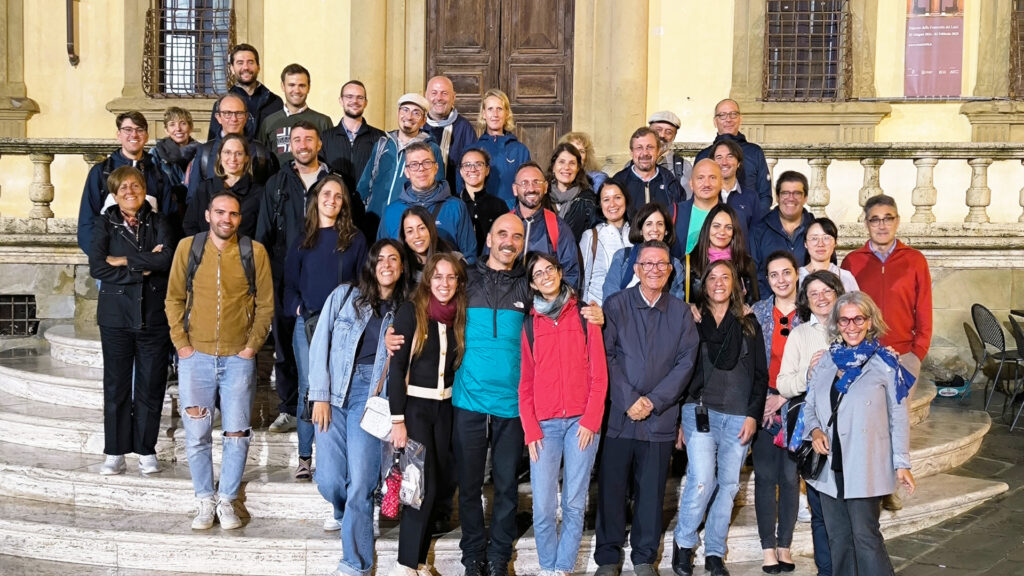
October 31, 2024, marks the conclusion of the European BOW project, leaving researchers with a mix of emotions. After four years of collaborative efforts, scientists from various institutions across Europe have achieved significant advancements while forging lasting professional and personal relationships. As the project ends, the consortium members are eager to continue their research, with hopes of future collaboration.
The Horizon 2020-funded BOW project (acronym for Biogenic Organotrophic Wetsuits) focused on hybridizing extracellular vesicle (EVs) membranes with magnetic nanoparticles (viz. making magnetic nanoparticles with a “wetsuit” made from an EV membrane) to advance the biocompatibility of synthetic nanomaterials. EVs are naturally occurring communication vehicles between cells, playing a critical role in transferring lipids, proteins, and nucleic acids and mediating physiological processes. The BOW project sought to harness the natural precision, circulation, and targeting capabilities of EVs by coating magnetic nanoparticles with EV membranes, a major leap in nanomedicine.
This innovative technology, successfully demonstrated in laboratory settings, represents a further step in the development of implantable nanodevices and materials. The ability to impart biomimetic functions on synthetic nanodevices opens new possibilities for personalized treatments and diagnostics, with potential applications in cancer, infections, and other diseases.
Over the course of the project, BOW achieved several key milestones:
Production and Characterization of EV and magnetic nano-building blocks: High-quality and reproducible batches of EVs were produced from microalgae and mesenchymal stem cells (MSCs). A palette of superparamagnetic nanoparticles was successfully synthesized. Ad hoc developed physico-chemical characterization and test of the biological performances in vitro, ex vivo and in vivo models (C. elegans nematodes and M. musculus mice): (i) ensured understanding and proof of suitability of the featured EVs as “wetsuit providers” and as safe therapeutic agents, (ii) evidenced the nanotoxicity issues of the synthetic nanoparticles.
Production, Characterization and Testing of the Nanohybrids: A microfluidic “dressing chamber” was designed and fabricated to encapsulate superparamagnetic nanoparticles within vesicle membranes, using both liposomes with a phospholipid composition mimicking that of the EV membrane and EVs themselves. New approaches and methodologies were developed to address the challenge of characterizing the quality of nanohybrid preparations, including encapsulation efficiency and yield, formulation purity, and coverage degree. Nanohybrids have demonstrated significantly reduced toxicity compared to pristine magnetic nanoparticles.
Collaborative Success: The interdisciplinary nature of the project fostered a robust collaborative environment, with contributions from fields such as nanotechnology, physics, chemistry, biology, and medicine. These four years have been important also because more than 20 young researchers have been trained in this vibrant and multidisciplinary environment.
The promising results pave the way for continued research and future clinical applications, particularly in addressing unmet medical needs in areas such as tissue fibrosis, cancer and neurodegenerative diseases. Additionally, the project’s innovations could have commercial potential in the cosmeceutical sector, with EVs showing promise in skin repair and regeneration.
Funded by nearly €4.5 million from the European Union’s Horizon 2020 programme, the BOW project was coordinated by the CSGI (Consorzio Interuniversitario per lo Sviluppo dei Sistemi a Grande Interfase) and brought together a diverse consortium of partners, including the CNR (National Research Council of Italy), University of Santiago de Compostela, Max Planck Institute for Polymer Research, Helmholtz Zentrum München, Atlantic Technological University, ETH Zurich, Hansabiomed Life Sciences, Biodevice Systems, University of Modena and Reggio Emilia, and Zabala Innovation.
The BOW project’s achievements mark just the beginning, as the team looks forward to exploring new opportunities to continue this important work and bring it closer to real-world applications. According to the project coordinator Paolo Bergese, from the CSGI-University of Brescia: “The BOW team, animated and inspired by over 20 young researchers—most of whom were hired through the grant—has energetically and creatively tackled both expected and unexpected challenges, including COVID-19, by joining minds and hearts. We are already working to leverage this experience in future European research initiatives, to bring BOW’s results, knowledge ecosystem, and the friendships we’ve built to the next level. BOW2 is coming!”.

