
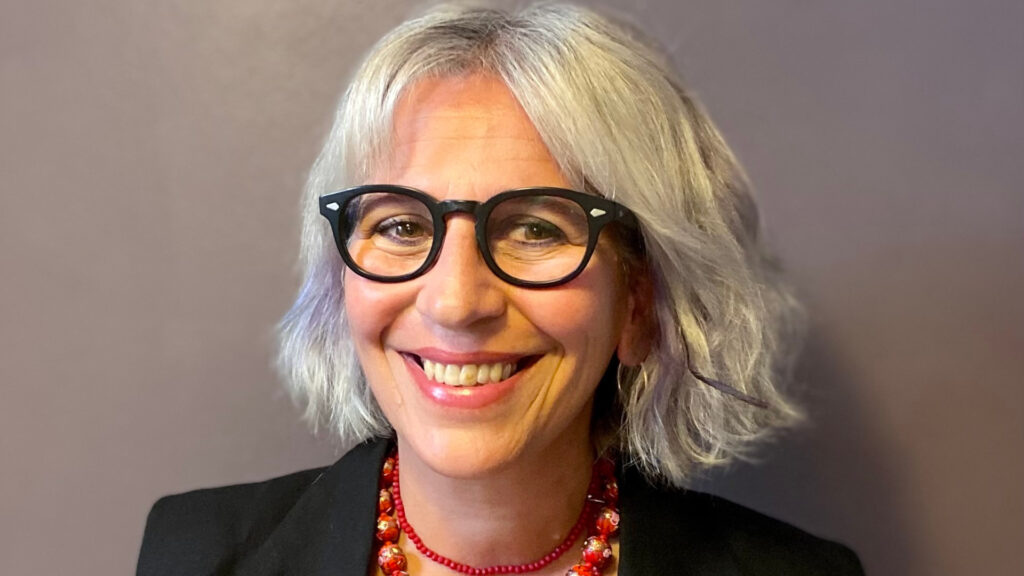
As the European BOW project approached its end, we seized the chance to interview the Principal Investigators of each partner organization to gather insights about their work and expectations. Today we spend some time with Antonella Bongiovanni of Italy’s National Research Council (CNR).
Hi Antonella! Please tell us about yourself:
Hi! I am Antonella Bongiovanni, a Senior Researcher at the Institute for Biomedical Research and Innovation (IRIB), part of the National Research Council (CNR) in Palermo. With a PhD in Cellular Biology from the University of Palermo and experience as a PostDoc and visiting scientist at St. Jude Children’s Research Hospital in the USA, I specialize in cellular biotechnology, particularly membrane remodelling and cell communication. Recently, I’ve become passionate about extracellular vesicles. I led the H2020 VES4US project and co-founded EVEBiofactory, a deep tech startup focused on developing extracellular vesicles from microalgae for therapeutic and cosmetic applications.
What caught your attention the most about the BOW project when it was presented to you?
I vividly remember discussing with Paolo Bergese and Mauro Manno in Palermo how to push the boundaries of extracellular vesicle use in clinical applications. That’s when the idea came up—to harness what nature has already perfected for cell-to-cell communication: the plasma membrane, which also wraps extracellular vesicles from any cellular sources. What intrigued me most about the BOW project was indeed its groundbreaking approach of transferring the molecular design optimized by cells to nanotechnological devices. This addresses one of regenerative medicine’s toughest challenges: imparting biological properties like immune evasion to technological materials. And if the science behind BOW wasn’t compelling enough, the project is backed by an exceptional team of highly skilled, rigorous colleagues, who also happen to be dear friends.
What are the IRIB’s responsibilities in the BOW project?
BOW proposes using extracellular vesicle membranes to replicate key biological functions in synthetic nanomaterials. The result is a biogenic-synthetic nanohybrid featuring a magnetic core camouflaged by the biomimetic and organotropic capabilities of the EV membrane. Building on the VES4US project, in collaboration with Mauro Manno from IBF-CNR and Nicolas Touzet from ATU, my group at IRIB is responsible for the production and quality control of small extracellular vesicles derived from microalgae, named nanoalgosomes.
What is the main innovation you are contributing to?
Within the VES4US and BOW projects, we have validated key attributes of nanoalgosomes and their production process, achieving significant milestones, including the incorporation of the startup EVE Biofactory, a CNR spinoff launched in September 2022. Our main innovation is the development of a sustainable and scalable method to produce extracellular vesicles from microalgae. This approach offers an eco-friendly alternative to synthetic methods and the production of EVs from mammalian cells, ensuring improved biocompatibility and reproducibility. These EVs have broad applications in drug delivery and skincare, providing targeted and efficient solutions while reducing the environmental impact of production. Building on insights gained from the BOW project, we are pushing the boundaries of bio-nanotechnology to create innovative, effective products for a variety of applications.
What has been the biggest challenge for you and your team in the BOW project?
One of the biggest challenges for our team in the BOW project was producing high-quality, reproducible batches of microalgal extracellular vesicles in large quantities. These EVs were one of the three “building blocks” used to create the BOW nanohybrids. Ensuring consistent quality for ex vivo and in vivo biological characterization, membrane functionalization, and nano-hybrid production was critical. To overcome this, we developed and applied refined quality control tools and processes to ensure reproducibility, which allowed us to meet the strict demands of the project and contribute successfully to the overall goals.
What learnings from the BOW collaboration do you take with you?
The BOW collaboration provided invaluable scientific and personal insights. From a technical perspective, I gained deep knowledge of the physico-chemical and biological features of extracellular vesicles, particularly useful when the goal is their advanced engineering—such as loading them with synthetic particles or biotherapeutics. Additionally, working closely with experts across various fields, I learned the critical importance of meticulous quality control and reproducibility in large-scale production, which I will carry into future projects.
On a personal level, the BOW project demonstrated the impact of human connection beyond science. The friendly, curiosity-driven environment fostered by team members at every career level and by a great coordinator (Paolo!), made these four years more engaging and creative. This atmosphere, filled with passionate scientists eager to share and explore ideas, made the journey even more fulfilling and strengthened my belief in the value of interdisciplinary teamwork.
What would you like to highlight from the IRIB team in the project?
I would like to highlight the incredible teamwork and dedication of my group at IRIB throughout the project. My group was just one piece of the puzzle, and our success was greatly enhanced by the outstanding cooperation from everyone involved.
I want to specifically acknowledge the wonderful attitudes and commitment of my collaborators, particularly Giorgia Adamo and Sabrina Picciotto. Their enthusiasm, creativity, and hard work were instrumental in overcoming challenges and driving our progress. It was truly inspiring to witness how our diverse skills and perspectives, as well as our cultural differences—ranging from people like us from the Mediterranean and the deep south of Europe to those from the northern parts—came together to achieve our shared goals.
What expectations related to BOW and/or the EVs do you have once the project ends?
As the BOW project comes to an end, I see it not as the finish line, but as a significant step forward toward our goals. We’ve made tremendous progress in understanding and engineering extracellular vesicles, but there’s still so much potential to explore. I believe we’re closer to where we wanted to go, but the journey is far from over.
Looking ahead, I’d like to further advance the applications of EVs, particularly in clinical settings, and optimize their scalability for industrial use. There are still many doors to open, including a deeper exploration of how EVs can be tailored for specific therapeutic uses and how we can streamline production for broader market adoption.
I see potential for a “BOW II” or similar project, which could focus on taking the foundational work we’ve done and pushing it into real-world applications, perhaps even moving toward clinical trials. Continuing collaboration with the same interdisciplinary network would be invaluable as we strive to open these new doors and fully explore the power of these naturally evolved nanoparticles—the EVs.

