
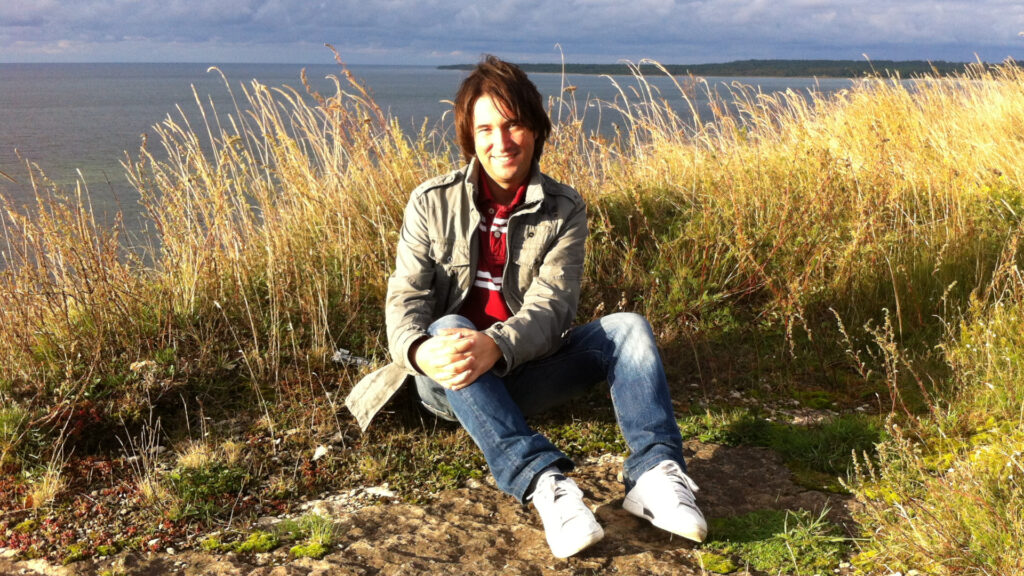
The BOW project is approaching its final stages, We are speaking with the Principal Investigators from each partner organization to learn more about their work and perspectives. Now, let’s hear from Paolo Guazzi, representing HansaBioMed Life Sciences.
Hi, Paolo! Please tell us about yourself:
Hi everyone! I am currently covering the position of Chief Operation Officer at HansaBioMed Life Sciences, a SME (small and medium-sized enterprise) based in Tallinn, Estonia. So, how did I end up in Tallinn? Well, let me take you back a bit. I moved here 12 years ago. The year before that I started a postdoctoral project in Siena, my hometown, aimed at using circulating tumour markers as diagnostic tools, a topic I really liked. Unfortunately, the project was closed with the economic crisis that hit Siena, and I saw a good opportunity in starting to work with exosomes and EVs. HansaBioMed was just born and had interesting projects about liquid biopsy, so I decided to move to Tallinn. After 12 years, I can say that it was a good decision.
What does a COO in a small company do? In an SME like ours, it means juggling a bit of everything, from overseeing R&D and managing commercial relationships to handling marketing, ISO quality standards, managing people and the company. Many things, that helped me to make experience in different fields, moving the company from a start-up state to a well-established player in the field of the EVs.
As background, I studied Chemistry and Pharmaceutical Technologies at Siena University and hold a PhD in Medical Biotechnologies.
What caught your attention the most about the BOW project when it was presented to you?
I actually joined the project a bit late, just 2 years ago, due to some changes in our team, but I’ve been familiar with the topic from the start. The idea of developing hybrid biologic nanoparticles is exciting, not only considering their potential and future in therapeutics, but also how they align with our company’s goals. Indeed, engineering EVs could lead to the next generation of biological reference materials, which would be a useful aid for academic researchers, companies, and developers of new equipment. Our goal as company is to stay at the forefront, as we’ve done for over a decade, by consistently delivering cutting-edge solutions for our customers, and constantly implementing our know-how.
What are HansaBioMed’s responsibilities in the BOW project?
HansaBioMed’s main responsibilities in the BOW project focus on quality control (QC) for both purified EVs and hybrid nanoparticles. Our tasks involve characterizing the EVs and gathering characterization data from other project partners. We then compared and analysed these data to establish a quality check system for these vesicles and nanoparticles. The goal was to develop a QC assessment tool that can be integrated into a manufacturing workflow. This work was collaborative, as we rely on data and input from other partners to ensure that the system we create is robust and effective.
What has been the biggest challenge for you and your team in the BOW project?
The biggest challenge in the BOW project was developing the hybrid particles and for us, determining the right parameters for the QC package. For this purpose, it is crucial to understand the physical, chemical, and biologic characteristics of these hybrids to create a reliable, reproducible, and cost-effective analysis package. This task was particularly challenging because it required a deep dive into the complexities of the hybrids, which were new scenario for us. However, thanks to the collaborative efforts of our project partners, who provided detailed analyses of the particles, we were able to overcome this challenge. Their insights were invaluable in helping us set up the best possible QC system. Successfully establishing these parameters was a significant achievement for our team, and it reinforced the importance of collaboration in tackling complex scientific challenges.
What results have been most satisfactory for you?
Definitely, a great achievement for us is the paper “A decision-making tool to navigate through Extracellular Vesicle research and product development”, featuring our scientist Francesca Loria, as the first author. The paper describes how a decision-making matrix, developed in BOW project, can find application in research as a systematic approach for evaluating of the quality of nanoparticles. This approach is typical of industrial QA (quality assurance) and QC processes, and commonly not used in academic field, but with the EV community focused on establishing guidelines for EVs, such a system could be highly beneficial. The paper is currently under revision, and a pre-print version is available on Biorxive.
What learnings from the BOW collaboration do you take with you?
From every experience we learn something, building our personal growth. During these 2 years I was involved in BOW, I had the chance to collaborate with brilliant scientists, learning new technologies, being involved in the writing of new projects and enhancing my understanding of the nanoparticle field, in a friendly and informal atmosphere. Most importantly, I had the opportunity of meeting many nice people, which truly makes the difference.
What would you like to highlight from the HansaBioMed team in the project?
I would particularly like to highlight the great work of Francesca and any contributions coming from other team members. Additionally, I want to acknowledge Natasa Zarovni for her valuable involvement in the project writing and her contributions during the first two years of the project.
What expectations related to BOW and/or the EVs do you have once the project ends?
Looking ahead, I am happy about exploring new opportunities around the achievement we mad with BOW. Developing hybrid nanoparticle remains a challenge and there is still much to be done.
There may also be potential for a follow-up project, such as BOW II, which could be focused more on the technology for the hybrid manufacturing, or analysis. The possibilities for continued innovation are promising, and I am eager to see how we can further contribute to this dynamic and evolving field.

