
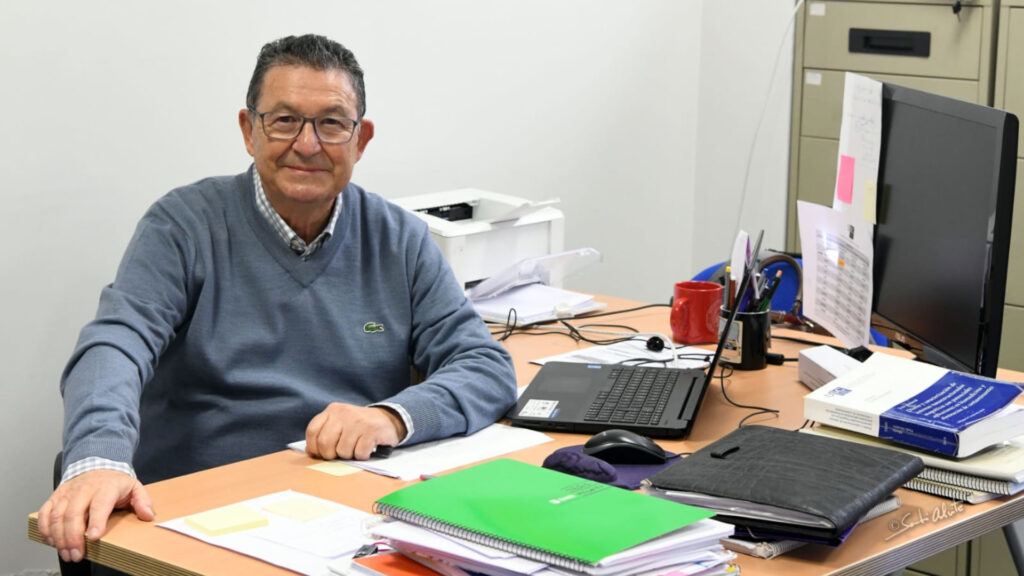
The European BOW project is nearing its conclusion. We took the opportunity to interview the Principal Investigators from each partner organization to gain insight into their work and expectations. Now, it’s time to hear from José Rivas of the University of Santiago de Compostela.
Hi, José! Please tell us about yourself:
I am a Professor of Physics at the University of Santiago de Compostela (USC), specializing in nanotechnology and magnetic materials. I obtained my PhD in physical sciences from the University of Valladolid and completed my postdoctoral research at the Max Planck Institute in Stuttgart. Upon joining the University of Santiago de Compostela, I founded the NANOMAG laboratory at USC, developing complex magnetic nanomaterials that led to the creation of the startup NANOGAP. I was the first General Manager of the Iberian International Nanotechnology Laboratory (INL) in Braga. All this knowledge in nanotechnology and magnetic nanomaterials has been utilized in the BOW project. It has been a constant challenge to integrate this knowledge with the world of extracellular vesicles. It is a project from which we have learned a lot.
What caught your attention the most about the BOW project when it was presented to you?
We had previously worked with magnetic nanoparticles in other European projects in the field of biomedicine, especially for the early diagnosis and treatment of Alzheimer’s disease, developing functional magnetic nanostructures for the ultra-early stages of the disease. Thanks to these European projects and in collaboration with Dr. Valentin Alek Dediu, we met Prof. Paolo Bergese, who proposed an innovative project involving the use of hybrid magnetic nanoparticles with a membrane surface made from extracellular vesicles. This idea, risky but very attractive and with great innovative potential, fascinated us, and we decided to join this new project.
What are the University of Santiago de Compostela’s responsibilities in the BOW project?
In this project, we lead Work Package 2, responsible for the synthesis and functionalization of high-quality superparamagnetic iron oxide nanoparticles (Magnetic Beads Devices – MBDs) with biocompatible coatings. We use wet chemistry methods to synthesize MBDs based on magnetite (Fe3O4). These nanoparticles are coated with organic or inorganic layers and are produced in two sizes:
• Single core (30-40 nm): Based on SPIONS (Superparamagnetic Iron Oxide Nanoparticles).
• Multicore (100-200 nm): Based on superparamagnetic beads.
The final composition and size are defined according to the requirements of Work Packages 3 and 4, related to coating procedures and toxicity studies.
What is the main innovation you are contributing to?
The main innovation of our group was to reliably and successfully obtain complex and colloidally stable magnetic nanoparticles within these nanometric ranges. These nanoparticles include fluorescent molecules for optical detection, while maintaining their magnetic properties intact. This allows for the remote manipulation of the nanoparticles using external magnetic fields and their simultaneous optical and magnetic detection using techniques such as magnetic resonance imaging.
What has been the biggest challenge for you and your team in the BOW project?
Perhaps the greatest challenge of the project is its multidisciplinary nature and the large number of groups and institutions involved. This project includes physicists, chemists, biologists, and people from academia and industry, coming from northern, central, and southern Europe. At the start of the project, it was hard to imagine that particles synthesized in Santiago de Compostela would be used and analysed in various biochemical experiments in Italy, Germany, Switzerland, Latvia, and Ireland, with positive results. In my opinion, this is the great success of the project, and of course, these results open many hopes for the future and the continuity of the project.
What results have been most satisfactory for you?
One of our most gratifying achievements was the successful integration of diverse requirements into the magnetic prototype materials, drawing from various fields such as microfluidics, biomedicine, and bioimaging.
What learnings from the BOW collaboration do you take with you?
In this project, I’ve recognized the importance of interdisciplinary collaboration and how to integrate knowledge from various fields to address complex challenges. Moreover, I’ve been captivated by how nanotechnology and interdisciplinary teamwork can lead to substantial progress in medicine and biotechnology. The inorganic hybrid devices we’ve developed, coated with cell membranes, constitute a promising research area with extensive potential in theragnostic applications. For example, they could be employed to deliver targeted medications directly to cancer cells or detect disease biomarkers at an early stage.
What would you like to highlight from the University of Santiago de Compostela’s team in the project?
The Santiago team reflects the interdisciplinarity of the BOW project. It consists of physicists and chemists, with a balanced mix of genders, and is composed of two doctoral students and two senior scientists. Thanks to the BOW project, we have maintained close collaboration with other European groups specialized in areas such as biology and microfluidics. This has taken us out of our comfort zone and opened exciting opportunities for future collaborations.
What expectations related to BOW and/or the EVs do you have once the project ends?
When the BOW project is completed, in addition to exploring the possibilities of requesting a new project with modified objectives, we have also opened up new research opportunities related to inorganic compounds and extracellular vesicles (EVs). These compounds and structures can have significant applications in various fields, such as medicine, biotechnology, and materials science. For instance, EVs have been studied as potential biomarkers and as vehicles for drug delivery.

